
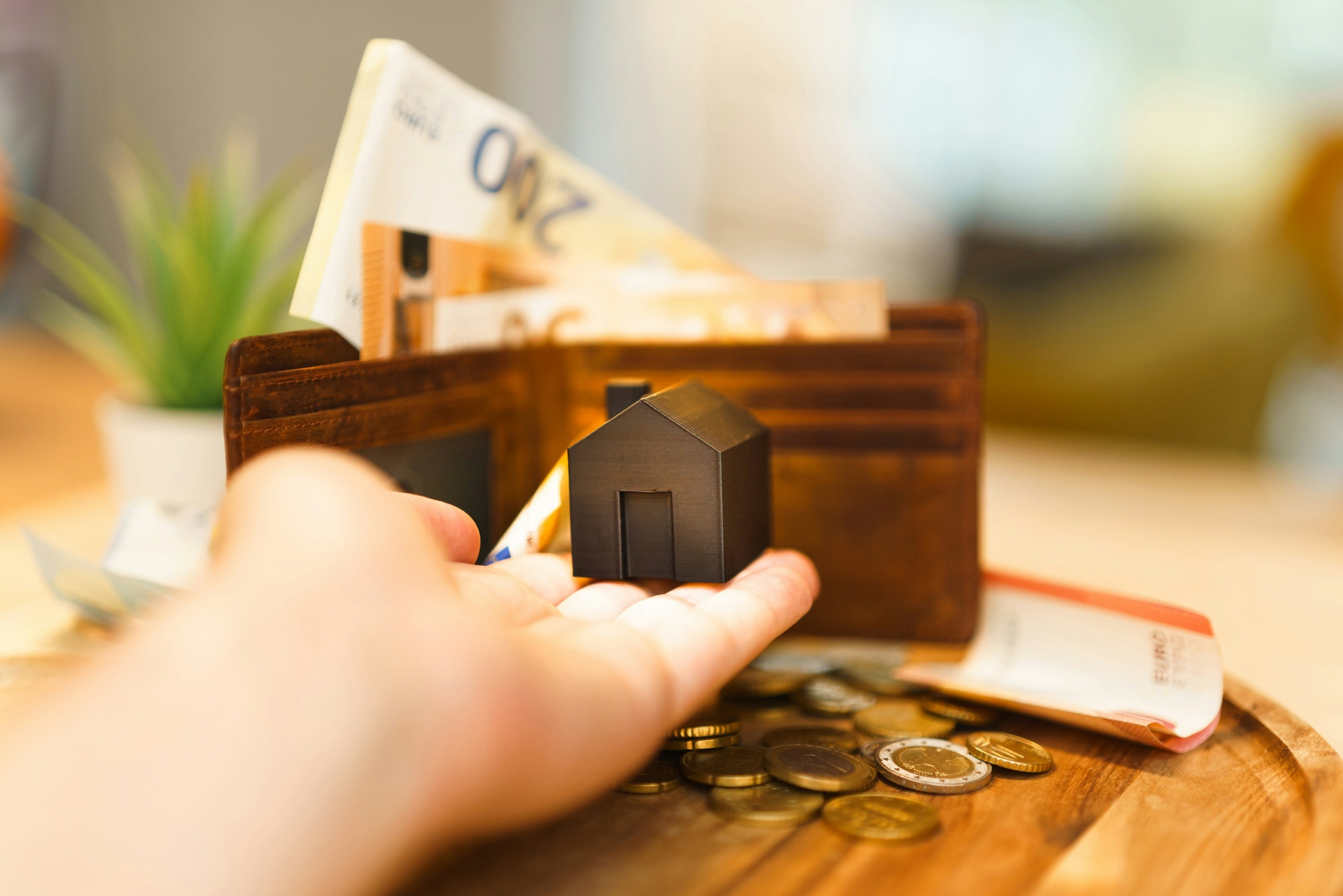
Renting in Japan as a foreigner is manageable once you know the basics: neighborhoods are priced largely by train-station access, units tend to be compact, and most apartments are unfurnished. Upfront costs are higher than many countries—often 3–5 months’ rent—covering deposit (shikikin), sometimes key money (reikin), an agent fee, a guarantor-company fee, and the first month.
In this edition, we feature an interview conducted by Isaac Correa from Amazing Realty with his boss, Edo Wataru, about the real estate world. The result was an honest, practical conversation full of useful information that we’d like to share with you today.
What do I need to rent an apartment in Japan?
Residence Card (Zairyu Card): You cannot rent a long-term apartment on a tourist visa. You must have your physical card or a “Certificate of Residence” (Juminhyo) from your local ward office.
Proof of Income: Typically, landlords want to see an employment contract or the last three months of pay slips. Your monthly rent should generally not exceed 30% of your gross monthly income.
A Japanese Phone Number: Many management companies will not accept an application if they cannot reach you on a domestic number.
Emergency Contact: You will need the name and contact info of someone (often a Japanese national or a long-term resident) who can be reached if you cannot be found.
A Japanese bank account: Rent is usually withdrawn directly from your bank account, having one ready by the contract signing is important.
Landlords usually require a guarantor and standard documents (ID/residence card, income proof), and building rules are taken seriously. A bilingual agent can smooth the process, matching your lifestyle and commute needs to a realistic budget.
What factors are directly related to the property cost?
Rent in Japan is priced with mathematical precision. If you are looking to save money—or understand why a unit is expensive—keep these seven factors in mind:
- 1. Building Age: In Japan, newer is almost always more expensive. Newer buildings feature the latest earthquake technology and modern aesthetics. Generally, rent depreciates as a building ages.
- 2. Distance to the Station: This is the #1 price driver. Prices drop significantly once a walk exceeds 10 minutes. Units that require a bus to reach the station offer the most square footage for the lowest price.
- 3. Construction Date (1981 Divide): Buildings built after 1981 (Shin-Taishin) meet stricter seismic codes. Older buildings (Kyū-Taishin) are cheaper but may have higher insurance costs and less vibration resistance.
- 4. Renovations (Reform): Many older “mansions” have been fully gutted and modernized inside. These “renovated” units are a “pro-tip” for expats: you get a brand-new interior at an old-building price point.
- 5. Layout & Floor Level: * Height: Rent increases as you go up. The 1st floor (1F) is the cheapest due to privacy and light.
- Sunlight: South-facing units (Minami-muki) command a premium for natural warmth and light.
- 6. Location & Amenities: Proximity to a Shotengai (shopping street), a 24-hour supermarket, or a major hub like the Yamanote Line will keep prices high.
- 7. The “Invisible” Extras:
- Management Fees: Often listed separately from the base rent.
- Security: Buildings with “Auto-lock” lobbies and “Takuhai” (delivery) lockers are priced higher for the added convenience and safety.
Why is the first month of rent so expensive?
In many cases, you have to pay a security deposit (“敷金 – shikikin”) and a non-refundable gratuity payment to the landlord (“礼金 – reikin”). On top of that, there’s the real estate agent’s commission (“不動産 – fudōsan”), which is usually equivalent to one month’s rent, plus the rent for the current month and sometimes even the following one in advance. It’s also common to be charged additional fees such as fire insurance (“火災保険 – kasai hoken”), lock change fee (“鍵交換費用 – kagi kōkan hiyō”), and if you don’t have a Japanese guarantor (“連帯保証人 – rentai hoshōnin”), you’ll need to hire a guarantee company (“保証会社 – hoshō gaisha”). Why are some places listed with no shikikin or reikin?
When renting in japan we should know that a property has unique conditions, and this will depend on the owner of the property. In some cases you will see than apartment has low entrance cost, usually to attract those who cant pay a large amount upfront. For example, when you you may see costs such as cleaning fee to be paid at the end, when moving out, or you may also see that there are campaigns, where the rent for the first month is free.
Why are some places listed with no shikikin or reikin?
Apartments with no shikikin or reikin —「敷金(しききん)・礼金(れいきん)なし」— are becoming increasingly popular, especially among students and foreigners. Many landlords are adapting to this trend and offering more accessible options from the start. However, it’s important to carefully read the contract, as there may be other costs involved. Always confirm the details with the real estate agency before signing.
We would like to provide an example for the initial cost of an apartment, this is just an estimation based on our experience, always check with your real estate agent what is the initial cost of the apartment you choose.
| Item | Calculation / Est. | Estimated Cost |
| Pro-rated Rent (March 15–31) | 17 Days | ¥27,419 |
| Advanced Rent (April) | 1 Month | ¥50,000 |
| Security Deposit (Shikikin) | 1 Month (Avg) | ¥45,000 |
| Key Money (Reikin) | 1 Month (Avg) | ¥45,000 |
| Brokerage Fee | 1 Month + Tax | ¥49,500 |
| Guarantor Company Fee | 100% of Rent | ¥50,000 |
| Fire Insurance | Flat Fee | ¥20,000 |
| Lock Replacement Fee | Flat Fee | ¥16,500 |
| Disinfection/Cleaning Fee | Varies | ¥20,000 |
| ESTIMATED TOTAL | ¥323,419 |
Can I share the rent with someone else?
Yes, but it depends on the landlord. Some properties only allow cohabitation between family members or couples. In other cases, it’s completely prohibited. It also requires trust — if one person leaves or stops paying, the other is fully responsible. Issues related to cleanliness, living habits, or space sharing may also arise. It’s important to notify from the beginning if two people will be living there; otherwise, there could be penalties.
To learn more about Room Share Apartment in Japan click this link.
What do terms like 1LDK mean?
Términos como 1R, 1K, 1DK y 1LDK pueden parecer similares, pero la diferencia clave está en el tamaño del área de cocina–comedor, medido en tatamis (aprox. 1,62 m² cada uno):
1R (Studio)
The living room and kitchen are in one open space, with no separation.
→ Typical size: approx. 15–25 m²
1K
One main room with a separate kitchen, usually compact (under 4.5 tatami mats).
→ Typical size: approx. 15–25 m²
1DK
One bedroom plus a dining–kitchen area measuring 4.5–8 tatamis.
→ Typical size: approx. 25–35 m²
1LDK
One bedroom plus a Living–Dining–Kitchen area larger than 8 tatamis (>13 m²).
→ Typical size: approx. 30–50 m²
2LDK
Two bedrooms plus an LDK space, ideal for couples or small families.
→ Typical size: approx. 50–70 m²
3LDK (or more)
Three or more bedrooms plus an LDK space. Usually 70 m² or more, suitable for families.
→ Typical size: approx. 70–100+ m²
We also recommend the following guide to learn how to read the layout of a property: click here.
What if I have problems, want to move out, or my contract ends?
Contracts are usually for 1 or 2 years, but it’s possible to leave earlier. In such cases, you must give at least one month’s notice to the property management company (“管理会社 – kanri gaisha”). Depending on the contract, there may be penalties if you leave within the first year, so it’s crucial to check everything carefully from the start. Also, be mindful of move-out dates. For example, if your contract ends on August 31, but you stay until September 1, even just for one extra day, you’ll be charged for the entire month.
Renting in Japan is a unique process that requires a mix of preparation, cultural understanding, and financial planning. While the upfront costs and technical terms like Reikin or Shin-Taishin can feel overwhelming at first, they are simply the standard steps to securing your new home. By understanding how building age, location, and layouts affect your monthly budget, you can make an informed decision that balances your lifestyle with your finances. Whether you are a student, a professional, or moving with a family, the right preparation makes all the difference.
We Are Here to Help
Moving to a new country is a big step, and you don’t have to do it alone. If you have questions about a specific neighborhood, need help deciphering a contract, or want to start your apartment search in Japan, please contact us. Our team is dedicated to smoothing out the process for you, and we will do our absolute best to find the perfect home for your new life in Japan.


Join The Discussion